Half the Battle Is Getting There: How Simply Showing Up Quietly Rewires Your Luck
The Night You Almost Stayed Home
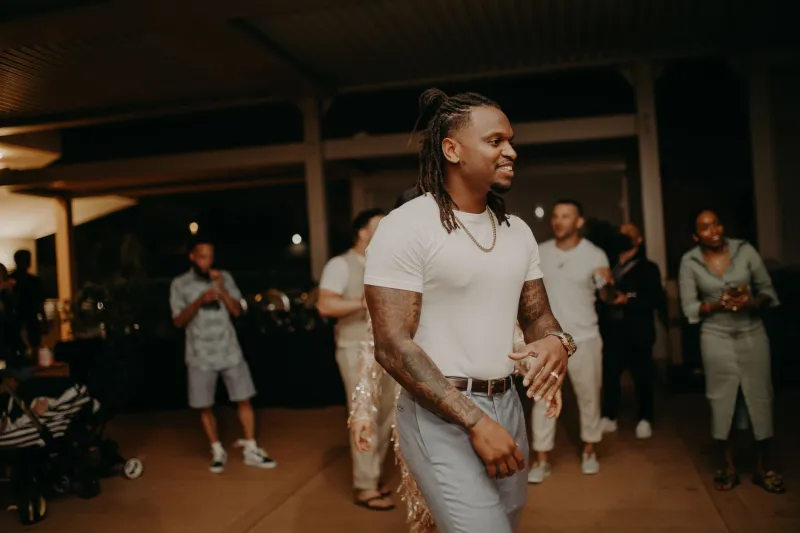
Picture this: it's a Thursday evening, you're tired, and there's a networking happy hour you RSVP'd to three weeks ago when your future self seemed way more ambitious. The couch is calling. You've already mentally drafted the excuse text. And then — for reasons you can't fully explain — you go anyway.
Two hours later, you're deep in conversation with someone who ends up becoming a business partner, a close friend, or the person who casually mentions a job opening that changes the whole direction of your career.
Sound familiar? If not, ask around. Stories like this are everywhere. And they all start with the same deceptively simple decision: just showing up.
Why Luck Has a Location Problem
Here's the thing about good fortune that doesn't get nearly enough airtime — it's not hovering in the air waiting for the right mindset to attract it. A lot of the time, luck is geographic. It lives inside rooms, conversations, and moments that only happen when you're physically (or mentally) present for them.
Richard Wiseman, a British psychologist who spent years studying what separates lucky people from unlucky ones, found something fascinating: lucky people aren't blessed with some cosmic advantage. They're just better at creating and noticing opportunities. And one of the biggest ways they do that? They put themselves in more situations. They show up more.
Consistency of presence creates what researchers sometimes call "serendipity surface area" — the more places you are, the more chances random, wonderful things have to find you. It's basic math dressed up as magic.
The Invisible Compound Interest of Presence
Think about showing up the way you think about a savings account. One deposit doesn't feel like much. But consistent deposits, over time, build something real. Every time you walk into a room — a gym class, a neighborhood block party, a professional conference you weren't sure was worth the registration fee — you're making a small investment in your own luck.
Most of those deposits won't pay off immediately. That's the part that trips people up. We're wired to want instant returns, so when we show up somewhere and nothing dramatic happens, we write it off. But luck doesn't always work on your timeline.
The woman you barely spoke to at last spring's community fundraiser? She might be the one who recommends you for something six months from now because she remembered your face and your energy. The guy you nodded to every Tuesday at your local CrossFit box? He might become your most valuable professional contact — but only after a year of quiet, consistent presence building that invisible bridge of familiarity.
Showing up is compound interest for your social and professional life. It doesn't look like much until suddenly, it looks like everything.
When You Really, Really Don't Want To
Let's be honest about the hard part. Showing up is easy when you're excited. It's a whole different challenge when you're drained, anxious, or just genuinely not feeling it.
But here's a counterintuitive truth: the times you show up despite not wanting to are often the most valuable ones. Why? Because most people don't. When everyone else is skipping the optional team lunch or bailing on the alumni mixer, the person who walks in anyway stands out. They get the room to themselves, in a sense. The connections are more concentrated, the conversations go deeper, and the memory of them sticks.
Psychologists call this the "effort heuristic" — we assign more value to things that cost us something. When you show up on a hard day, people feel that. There's an authenticity to it that effortless attendance doesn't carry.
It's Not Just About Networking Events
Before you roll your eyes at the idea of forcing yourself to more awkward professional gatherings, let's expand what "showing up" actually means.
Showing up looks like:
- Staying for the whole thing instead of making your escape at the first polite opportunity
- Putting your phone down during dinner with people you love, so you catch the moment instead of scrolling past it
- Going to the gym on the unmotivated Tuesday — because that's the day you end up in a conversation that leads somewhere unexpected
- Attending the small, unglamorous community event that doesn't seem worth your Saturday morning
- Saying yes to the low-key hangout when a bigger, flashier plan falls through
Presence isn't about location. It's about attention. You can be physically in a room and completely absent. The luck comes from the full version of showing up — body, mind, and a little bit of openness to whatever might happen next.
The Psychology of the Open Door
There's a concept in social psychology called "weak ties," and it might be the most underappreciated force in your life. Weak ties are the people you know casually — not your best friends, not your coworkers, but the acquaintances at the edges of your social world. Research by sociologist Mark Granovetter found that these loose connections are often more valuable than strong ones when it comes to finding new opportunities.
Why? Because your close circle shares most of the same information you already have. Your weak ties live in different worlds. They know different people, move in different spaces, and carry different opportunities.
And here's the kicker: weak ties only form through repeated, low-stakes presence. You build them by showing up to the same places consistently over time, not by making grand gestures. They're built in the background, quietly, one "hey, good to see you again" at a time.
Making Peace With the Uneventful Nights
Not every room you walk into will deliver a life-changing moment. That's just reality, and making peace with it is part of the strategy. Most nights will be fine. Some will be forgettable. A handful will be genuinely great. And once in a while, one will be the kind of night you tell stories about for years.
You don't get to know in advance which one is which. That's the whole game.
The people who seem perpetually lucky aren't the ones who only show up when they're guaranteed a good return. They're the ones who've made a habit of walking through doors without knowing exactly what's on the other side — and they've learned to be okay with that uncertainty.
Your Simplest Luck Strategy Starts Tonight
If there's one habit that costs almost nothing and pays off in ways that are genuinely hard to predict, it's this: go. Go to the thing. Stay a little longer than you planned. Put your phone away when you get there. Say yes to the low-key invite you'd normally talk yourself out of.
Luck isn't just a feeling or a mindset — it's a practice. And one of the most accessible forms of that practice is also the most ancient: be somewhere. Be present. Let the room do a little of the work.
You never know which Thursday night is the one that changes everything. But you definitely won't find out from the couch.