Your Surroundings Are Shaping Your Luck More Than Your Thoughts Are
There's no shortage of advice telling you to think your way to a luckier life. Manifest harder. Visualize bigger. Believe deeper. And honestly? Mindset matters — we're not here to argue that.
But here's the thing nobody really talks about: your environment is quietly running the show in the background, and it might be doing more damage — or more good — than any thought pattern ever could.
The spaces you inhabit, the people you spend your Tuesday nights with, the clutter piled on your desk at 9 a.m. — all of it is either opening doors for you or slowly, invisibly closing them. Let's dig into the stuff you can actually rearrange to start catching more breaks.
The Room You Work In Is Sending You a Message Every Single Day
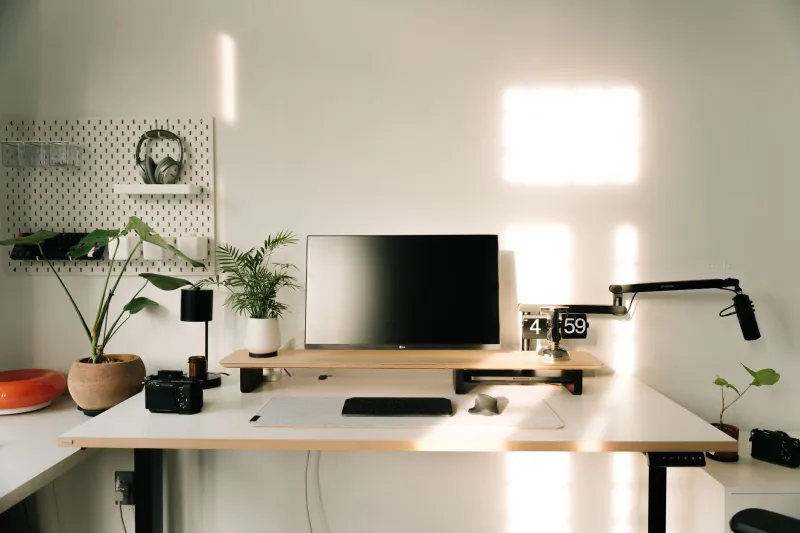
Walk into your workspace right now and just look at it honestly. Is it a place that makes you feel capable and energized, or does it quietly whisper chaos the moment you sit down?
Researchers at Princeton University found that physical clutter competes for your attention at a neurological level — it literally fragments your focus without you even realizing it's happening. When your brain is spending energy processing visual noise, it has less bandwidth for the kind of creative, open-ended thinking that tends to generate lucky moments.
Lucky breaks rarely come to people who are too scattered to notice them. Opportunity has this annoying habit of showing up when you're actually paying attention.
Try this: clear one surface completely. Just one. Your desk, your kitchen counter, whatever you spend the most time near. Notice how differently you think when that space is clean. That shift in mental clarity? That's your luck dial moving in the right direction.
The Five People Closest to You Are Basically Your Fortune Forecast
You've probably heard the Jim Rohn quote about being the average of the five people you spend the most time with. It sounds like a motivational poster cliché until you actually sit down and think about who those five people are in your life.
Social scientists call it "ambient affiliation" — the idea that the energy, habits, and opportunities of the people around you gradually seep into your own life whether you invite them to or not. Spend most of your time with people who are curious, generous, and genuinely happy for others when good things happen, and you'll find yourself bumping into more opportunities almost by accident.
The reverse is also true. Chronic complainers, people who treat life like a zero-sum game, folks who greet every new idea with "yeah, but" — they create an atmospheric drag that slows everything down, including your luck.
This isn't about cutting people off coldly or doing some ruthless social audit. It's about being intentional. Who are you choosing to spend your Saturday afternoons with? Are those people expanding your world or quietly shrinking it?
The Places You Hang Out Determine the Luck You Can Actually Access
Here's a practical truth that doesn't get nearly enough airtime: luck is largely a function of exposure. The more new environments, conversations, and situations you put yourself into, the more surface area you create for good things to find you.
Think about where most of your big breaks — jobs, friendships, relationships, ideas — actually came from. Chances are, they came from moments when you were somewhere slightly outside your usual routine. A networking happy hour you almost skipped. A class you signed up for on a whim. A coffee shop you wandered into because your usual spot was too crowded.
Sticking exclusively to familiar environments feels safe, but it's also statistically limiting. The same places tend to produce the same outcomes. If you want different luck, you need at least some different geography.
This doesn't mean blowing up your whole life. It means saying yes to the work conference in a city you've never visited. It means trying the new neighborhood restaurant instead of defaulting to your usual spot. Small expansions in your physical world create disproportionately large expansions in your opportunity field.
Your Digital Environment Counts Too — Maybe More Than You Think
Okay, let's talk about the space most Americans spend an embarrassing number of hours in every single day: their phone screen.
Your social media feeds, the podcasts in your earbuds, the newsletters landing in your inbox — these are environmental inputs, full stop. They're shaping your baseline mood, your beliefs about what's possible, and your perception of how the world works. And they're doing it constantly, on repeat, without a lot of conscious filtering on your end.
A feed full of outrage content, doom scrolling, and comparison culture is going to leave you feeling like luck is something that happens to other people. A feed full of interesting ideas, people doing creative things, and genuine positivity starts to recalibrate your sense of what's available to you.
Do a quick audit. Who are you following that consistently makes you feel worse about your life? Unfollow them — not with judgment, just with intention. Replace that slot with someone whose content genuinely makes you curious, inspired, or just happier. It sounds almost too simple, but your digital environment is one of the fastest things you can change today.
The Lucky Home: Small Physical Tweaks That Signal Big Things to Your Brain
There's a reason feng shui has stuck around for thousands of years — even if you're not ready to go full compass-and-bagua about it, the core instinct is solid. The physical arrangement of your home sends constant signals to your nervous system about safety, possibility, and energy.
A few concrete things worth trying:
- Let more light in. Natural light is one of the most reliable mood elevators we have. Open the blinds. Move your desk closer to a window if you can. Light environments literally make people more optimistic.
- Put something that makes you happy right where you'll see it first thing. A photo, a plant, a piece of art — something that fires a small hit of joy before your day even starts.
- Create a "possibility corner." Sounds a little woo, but bear with us. Designate a small space — a shelf, a corner of your desk — where you keep things that represent what you're working toward or excited about. It keeps your eyes and brain pointed at the future instead of stuck in the mundane present.
Redesigning Your Life Might Be the Luckiest Thing You Do All Year
Here's the bottom line: your mind and your environment are in constant conversation, and the environment is often the louder voice. You can do all the positive thinking in the world, but if you're surrounded by chaos, drained by the wrong people, and stuck in the same three locations on repeat, you're working against yourself.
Luck loves movement. It loves open space — physical, social, and digital. It shows up most reliably for people who've arranged their lives to be receptive to it.
So before you spend another hour trying to think your way to a better break, take a look around. What does your environment say about the kind of luck you're ready to receive? And more importantly — what's one thing you could shift today?
Start small. Clear the counter. Unfollow the account. Say yes to the thing you'd normally skip. The luckiest version of your life might just be one rearrangement away.